This content is provided for informational purposes only and does not constitute financial or investment advice. Property investment involves significant financial risk, and past performance does not guarantee future returns. Consult a qualified independent financial advisor or French notaire before making any property investment decision.
The primary challenge for international investors involves identifying which specific locations align with their personal financial goals and lifestyle requirements. Whether your strategy focuses on professional urban rentals or charming seasonal retreats, the essence of a successful search is to explore the various houses for sale in Limousin to understand the diversity of the current market. By reviewing active listings, you can better appreciate the architectural styles and local features that define each department. This qualitative assessment, supported by professional guidance, ensures that your property search is grounded in market reality rather than promotional generalities.
Your Limousin Investment Shortlist: 4 Key Decisions
- Department choice: Haute-Vienne (stability, 6-7% yield) vs Corrèze (tourism, 8-9% yield with vacancy) vs Creuse (ultra-budget, renovation-heavy)
- Budget reality: €100k purchase ≠ €100k investment once 7-8% notaire fees, renovation, and taxes included
- Location trumps price: market town proximity to services drives year-round rental demand over absolute lowest cost
- Legal framework: non-resident landlords require fiscal representative and must navigate French tax obligations
This analysis draws on transaction data from three years of Limousin property sales, notaire fee structures updated for 2025 regulatory changes, and rental yield patterns reported by regional estate agencies. Unlike promotional overviews positioning every location as equally viable, the framework below segments investment opportunities by capital tier and risk tolerance, enabling you to shortlist 2-3 target towns aligned with your specific constraints before initiating property search.
The department you select—Haute-Vienne, Corrèze, or Creuse—will determine whether you face year-round tenant demand or seasonal vacancy cycles, turnkey acquisition or renovation project commitment, and resale liquidity measured in weeks versus months. The following sections provide the comparative data necessary for objective location selection.
- Mapping Limousin’s Investment Landscape: Three Departments, Distinct Opportunities
- Matching Your Investment Profile to Location Strategy
- Six Towns Delivering Measurable Investor Returns
- Beyond Purchase Price: Total Cost Reality for International Buyers
- Common Questions from International Limousin Investors
Mapping Limousin’s Investment Landscape: Three Departments, Distinct Opportunities
Limousin comprises three departments—Haute-Vienne (87), Corrèze (19), and Creuse (23)—each occupying a distinct position on the price-to-yield spectrum. Haute-Vienne, anchored by the prefecture city of Limoges and its international airport, commands mid-range pricing typically between €900 and €1,200 per square metre for residential stock in market towns. Corrèze, stretching south toward the Dordogne border with Brive-la-Gaillarde as its economic hub, exhibits similar price bands (€800-€1,100/m²) but attracts a higher proportion of tourism-focused investment driven by the department’s lakes, hiking trails, and seasonal visitor economy. Creuse, the northernmost and most sparsely populated department, presents the region’s lowest entry prices—often €600-€900/m²—but demographic data from INSEE confirms the department recorded 115,527 inhabitants in 2023, down 2.62% since 2017, a structural population decline that directly impacts long-term rental demand viability.
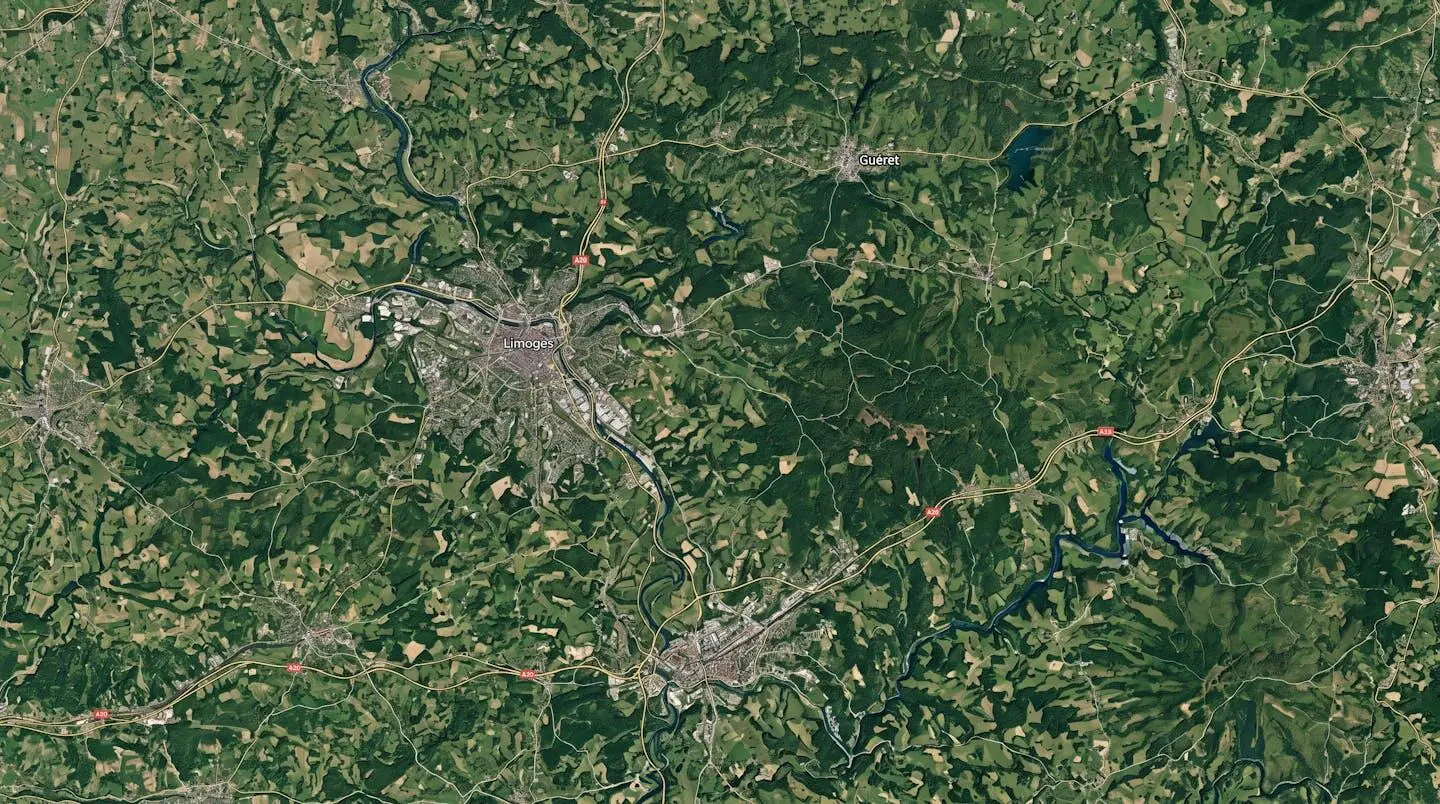
Investment success in Limousin depends on gathering valuable housing insights for informed decisions from transaction records and demographic indicators rather than relying on promotional generalities about regional charm or vague assertions of value. The most prudent approach for first-time investors involves selecting the department tier that matches your renovation capacity and vacancy tolerance before drilling down to specific town opportunities within that geography.
| Department | Avg Price/m² (2024-25) | Primary Rental Demand | Accessibility (Airport/Rail) | Best For Investor Profile |
|---|---|---|---|---|
| Haute-Vienne (87) | €900-1,200 | Year-round professionals, students, families | Limoges airport (UK routes), Paris rail 3h | Balanced investors seeking stable 6-7% yield with lower vacancy |
| Corrèze (19) | €800-1,100 | Seasonal tourism rentals, some year-round in Brive | Brive rail hub, A20 motorway access | Yield-focused investors comfortable with 4-5 month seasonal vacancy |
| Creuse (23) | €600-900 | Limited—depopulation reduces tenant pool | Remote: nearest airports Limoges (1h+) or Clermont-Ferrand | Renovation enthusiasts or lifestyle buyers with minimal rental expectation |
Matching Your Investment Profile to Location Strategy
Rather than presenting every Limousin commune as equally viable, the evidence-based approach segments location selection by three investor archetypes defined by capital availability, return objectives, and operational risk tolerance. Each pathway leads to a constrained shortlist of 2-3 departments or town types where your specific constraints align with market realities.
- If your available investment capital is €30,000-€80,000 (entry-level):
Primary objective = tourism rental income? → Target rural Corrèze towns (Uzerche, Meymac, Treignac) where 8-9% gross yields are achievable but accept 4-5 months annual vacancy during off-season.
Primary objective = long-term renovation project or lifestyle? → Creuse department offers sub-€50k properties but requires realistic expectation of minimal rental income and total renovation budgets often equaling or exceeding purchase price.
- If your available investment capital is €80,000-€150,000 (balanced):
Risk tolerance = lower risk, steady income priority? → Haute-Vienne market towns (Saint-Yrieix-la-Perche, Saint-Junien, Bellac) deliver 6-7% yields with year-round tenant demand from local employment bases.
Risk tolerance = higher yield acceptable with some seasonality? → Corrèze towns like Uzerche or Argentat offer 8% yields blending tourism summer peaks with potential for off-season long-term lets to local workers.
- If your available investment capital is €150,000-€300,000 (premium):
Priority focus = liquidity and capital preservation? → Limoges periphery suburbs (Couzeix, Panazol, Feytiat) attract professional tenants, deliver 5-6% yields, and offer strongest resale liquidity if you need to exit the investment.
Priority focus = yield maximization? → Brive-la-Gaillarde corridor properties blend business traveler demand with tourism proximity, achieving 6-7% yields with lower seasonal volatility than purely rural locations.
Entry-Level Capital: Creuse and Rural Corrèze (€30,000-€80,000)
Properties advertised under €50,000 in Creuse represent the region’s most accessible entry point by headline price but carry the highest total investment risk when renovation requirements and rental demand realities are factored. A typical scenario involves a stone farmhouse listed at €35,000 requiring immediate roof repairs (€8,000-€12,000), rewiring to current French electrical standards (€5,000-€8,000), septic system compliance work (€6,000-€10,000), and interior finishing to habitable condition (€15,000-€25,000). The actual capital commitment to reach a rentable or personally usable state frequently lands between €70,000 and €85,000 total—more than double the advertised price. Rural Corrèze in the €60,000-€80,000 range offers a more viable balance for investors prepared to operate seasonal tourism rentals, generating strong weekly rental rates (€600-€900 per week) from May through September.
Balanced Investment: Haute-Vienne Market Towns (€80,000-€150,000)
The sweet spot for international investors seeking predictable cash flow centers on Haute-Vienne market towns within 30 kilometers of Limoges. Saint-Yrieix-la-Perche, with approximately 6,800 residents, supports local employers including agricultural services, regional schools, and healthcare facilities that generate year-round tenant demand for two- and three-bedroom houses. Properties in habitable or light-renovation condition typically list between €90,000 and €140,000 for 80-120 square metres, positioning achievable gross yields in the 6-7% range when monthly rents reach €550-€700. This tier minimizes the dual risks that plague ultra-budget and purely tourism-focused strategies: excessive renovation capital traps and prolonged vacancy periods.
Premium Positioning: Limoges Periphery and Brive Corridor (€150,000-€300,000)
Investors allocating €150,000 or more access Limousin’s most liquid property segment: suburban Limoges neighborhoods and the Brive-la-Gaillarde economic corridor. Limoges periphery communes such as Panazol and Couzeix attract professional families employed by regional institutions, offering rental demand from stable tenant profiles with verifiable income sources and multi-year lease potential. Properties in this bracket—modern three-bedroom houses or renovated character homes with 120-150 square metres—command monthly rents of €750-€950, delivering gross yields in the 5-6% range. The yield compression relative to rural alternatives is offset by superior resale liquidity: when market conditions necessitate exit, urban-proximate properties attract buyers within weeks rather than the 6-12 month marketing timelines common for isolated rural stock.
The €30,000 Limousin Property Trap: Properties advertised under €30,000 in Creuse frequently require total investment exceeding €70,000 once essential renovation is completed. A Creuse farmhouse listed at €28,000 typically involves notaire fees of €2,100-€2,240 (7-8% of purchase price), roof and structural repairs ranging from €25,000-€35,000, electrical rewiring to French standards (€5,000-€8,000), septic compliance work (€6,000-€10,000), and interior finishing (€10,000-€15,000). Actual total investment to reach habitable rental condition: €76,000-€98,000. Properties under €30,000 typically require total investment 2.5-3 times the purchase price before generating any rental income.
Six Towns Delivering Measurable Investor Returns
The following town-specific analysis shifts from department-level frameworks to granular location assessment, providing the comparative metrics necessary for shortlist refinement. Each of these six locations has demonstrated sustained transaction activity over the past three years, indicating both buyer interest and sufficient property stock to enable acquisition within reasonable timelines.
Limoges periphery suburbs (Couzeix, Panazol, Feytiat) anchor the premium segment with properties averaging €1,100-€1,350 per square metre. Rental yields settle in the 5-6% range due to higher acquisition costs, but tenant quality—regional civil servants, hospital professionals, university staff—delivers consistent occupancy and low default risk. Saint-Yrieix-la-Perche, positioned 40 kilometers south of Limoges in Haute-Vienne, represents the balanced investor’s optimal target, with properties ranging from €850-€1,100 per square metre achieving monthly rents of €550-€700 and gross yields in the 6-7% band.
Brive-la-Gaillarde, Corrèze’s commercial hub, straddles the tourism-residential divide. Properties near the historic center command €1,000-€1,250/m², with three-bedroom apartments in the €140,000-€190,000 range. Landlords can pursue either long-term rentals at €700-€900 monthly (6-7% yield) or furnished tourism lets capturing summer demand at €800-€1,200 per week. Uzerche, a picturesque Corrèze town overlooking the Vézère River, delivers the highest gross yields (8-9%) but demands acceptance of seasonal volatility, with summer weekly rentals reaching €700-€950 but November-March generating minimal income unless converted to long-term local lets at reduced rates.
Historical transaction data reveals persistent demand concentration in Haute-Vienne market towns over rural Creuse alternatives. Long-term sale volume records published by IGEDD tracking departmental activity from 2004-2025 demonstrate Haute-Vienne consistently records 15-20% higher annual transaction counts than Creuse despite similar geographic area, reflecting stronger buyer confidence in rental demand sustainability.
Transaction listings across estate agencies reveal significant stock availability variation by department and price tier—Haute-Vienne market towns typically offer 40-60 active listings in the €80k-€150k range at any given time, whereas Creuse properties under €50k can remain listed for 6-12 months due to limited buyer pools and renovation deterrence. International buyers benefit from filtering available inventory by shortlisted target towns and budget parameters established through the decision framework above.
| Town | Department | Avg Price/m² | Est. Gross Yield | Typical Vacancy | Primary Tenant Type | Resale Liquidity |
|---|---|---|---|---|---|---|
| Limoges Periphery (Panazol, Couzeix) | Haute-Vienne (87) | €1,100-1,350 | 5-6% | 2-4 weeks/year | Professionals, families | Excellent (4-8 weeks) |
| Saint-Yrieix-la-Perche | Haute-Vienne (87) | €850-1,100 | 6-7% | 4-6 weeks/year | Local workers, families | Moderate (8-16 weeks) |
| Brive-la-Gaillarde | Corrèze (19) | €1,000-1,250 | 6-7% | 3-6 weeks/year | Professionals, tourism mix | Strong (6-12 weeks) |
| Uzerche | Corrèze (19) | €800-1,000 | 8-9% | 4-5 months/year | Seasonal tourists | Slower (12-20 weeks) |
| Guéret | Creuse (23) | €700-950 | 5-6% | 8-12 weeks/year | Local workers (limited pool) | Weak (16-30+ weeks) |
| Aubusson | Creuse (23) | €650-900 | 4-5% | Variable, high | Niche heritage tourism, retirees | Weak (20-40+ weeks) |
Beyond Purchase Price: Total Cost Reality for International Buyers
A recurring miscalculation among anglophone first-time buyers centers on conflating advertised property price with actual capital requirement. French property acquisition involves mandatory costs that add 10-20% to the headline figure before a single renovation euro is spent. Official guidance from the French Ministry of Economy confirms that since April 2025, departments can levy property transfer taxes (droits de mutation) at 5% rather than the previous 4.5%, with notaire professional fees, registration charges, and security contributions adding further layers. The total notaire fee package for older properties (more than five years since construction) routinely reaches 7-8% of the purchase price, whereas new builds benefit from reduced fees of 2-3%.
For a worked example: a Haute-Vienne property listed at €120,000 incurs notaire fees of approximately €8,400-€9,600 (7-8%), bringing the legal acquisition cost to €128,400-€129,600 before any renovation expenditure. If the property requires moderate updating—new kitchen and bathroom, interior decoration, garden tidying—budget an additional €12,000-€18,000. First-year property taxes (taxe foncière) for a property of this value in a Limousin commune typically range from €600-€1,000 annually depending on the specific commune’s tax rate, and property insurance adds another €300-€500. The comprehensive year-one capital requirement therefore approximates €142,000-€150,000 for a property advertised at €120,000.
The standard timeline from initial offer (compromis de vente) to final deed signing (acte de vente) spans 8-12 weeks, during which surveys, title searches, and mortgage arrangements (if applicable) are finalized. French law mandates a 10-day cooling-off period (délai de rétractation) following compromis signature, protecting buyers from impulsive decisions. Non-resident landlords face an additional ongoing obligation: appointment of a fiscal representative to handle French tax declarations and liaise with tax authorities. This service typically costs €300-€600 annually depending on the complexity of your rental income and whether you benefit from a double taxation treaty between France and your country of residence.
| Cost Component | Amount (€) | % of Purchase Price | Notes |
|---|---|---|---|
| Advertised Property Price | €120,000 | — | Baseline |
| Notaire Fees (older property) | €8,400-9,600 | 7-8% | Mandatory, paid by buyer |
| Moderate Renovation (kitchen, bath, decor) | €12,000-18,000 | 10-15% | Varies by property condition |
| Taxe Foncière (Year 1) | €600-1,000 | 0.5-0.8% | Payable October annually |
| Property Insurance (Year 1) | €300-500 | 0.25-0.4% | Mandatory for mortgage holders |
| Total Year-One Investment | €141,300-149,100 | 18-24% above purchase | Before furnishing or ongoing costs |
Common Questions from International Limousin Investors
Do I need to speak French to buy property in Limousin?
While legal proficiency is not a requirement, working with bilingual professionals is a major advantage. Specialist estate agencies provide comprehensive support in your native language, bridging the gap between international expectations and local administrative practices. From the initial viewing to the final signature at the notaire’s office, having an expert who understands both the local market and your specific needs ensures a transparent and secure transaction. The practical challenge arises during renovation project management and ongoing property administration where local tradespeople predominantly operate in French.
Can I get a mortgage as a non-resident international buyer?
French banks do extend mortgages to non-resident buyers, but lending criteria are stricter than for French residents. Expect to provide comprehensive income documentation (typically two to three years of tax returns), proof of employment stability, and evidence of existing assets. Loan-to-value ratios for non-residents rarely exceed 70-80%, meaning you’ll need a deposit of at least 20-30% of the purchase price plus acquisition costs. Interest rates for non-resident borrowers typically run 0.5-1% higher than resident rates.
What are my ongoing tax obligations as a non-resident landlord?
Non-resident landlords generating rental income from French property must declare this income to French tax authorities annually, regardless of whether you also declare it in your country of residence. France operates double taxation treaties with most anglophone countries (UK, US, Canada, Australia), allowing you to offset French tax paid against your home country liability. You are legally required to appoint a fiscal representative—an accountant or specialized service provider authorized to represent you to French tax authorities—which costs €300-€600 annually. Taxe foncière (property tax) is payable annually in October regardless of rental status.
How can I manage a rental property remotely from the UK or US?
Remote management relies on either professional property management services or a trusted local contact who can handle tenant queries, routine maintenance, and emergency response. French property management companies (gestionnaires) typically charge 8-12% of monthly rent plus VAT for full service including tenant sourcing, lease administration, rent collection, and maintenance coordination. For tourism rentals, specialized agencies manage bookings, guest check-in/check-out, cleaning between stays, and linen provision for 20-30% of rental income. Establishing relationships with reliable local tradespeople before problems arise prevents costly emergency callouts.
Will Brexit affect my ability to own and rent property in France?
Brexit has not altered the fundamental right of UK citizens to purchase and own French property—property ownership rights are governed by French civil law, not EU citizenship status. The practical changes affect residency duration and tax treatment. UK buyers can now spend only 90 days within any 180-day period in the Schengen area (which includes France) without a visa, limiting your ability to personally manage renovations or occupy the property for extended periods. Tax treaty provisions between the UK and France remain in force, preserving relief from double taxation on rental income.
The Limousin property market rewards investors who prioritize location-specific research over chase-the-lowest-price strategies. Transaction data from the past three years demonstrates that properties selected based on rental demand fundamentals—proximity to employment centers, transport infrastructure, and active local economies—consistently outperform ultra-budget acquisitions that trap capital in renovation black holes or face perpetual vacancy struggles. When you align your department and town selection with your actual budget, operational capacity, and risk tolerance rather than aspirational yield projections, the path to sustainable rental income and potential capital preservation becomes substantially clearer.
Important Limitations: Property market conditions fluctuate based on broader French economic factors, interest rate environments, and regional demographic shifts. Rental yield estimates presented reflect current market observations and may not predict future performance. Currency exchange rate movements affect sterling and dollar-denominated investors’ effective returns. Rural property markets can experience lower liquidity than urban alternatives, potentially extending resale timelines beyond typical expectations. Legal, tax, and regulatory frameworks governing non-resident property ownership are subject to change—consult qualified professionals for current requirements. For comprehensive financial and legal guidance tailored to your specific circumstances, engage an independent financial advisor specializing in international property investment and a French notaire with non-resident transaction experience.